Renowned for its quick pacers, Pakistani soil has yet to produce a player with Pat Cummins’ caliber. His leadership, fitness, and all-around skills make him an exceptional asset. Despite a strong cricket culture and passion in Pakistan, no player has been as consistent as him. Number of reasons, such as leadership development, domestic infrastructure, and physical standards have led to this polarity. To bridge this gap, holistic reforms in player development are necessary.
Deficiencies in Fitness and Workload Management
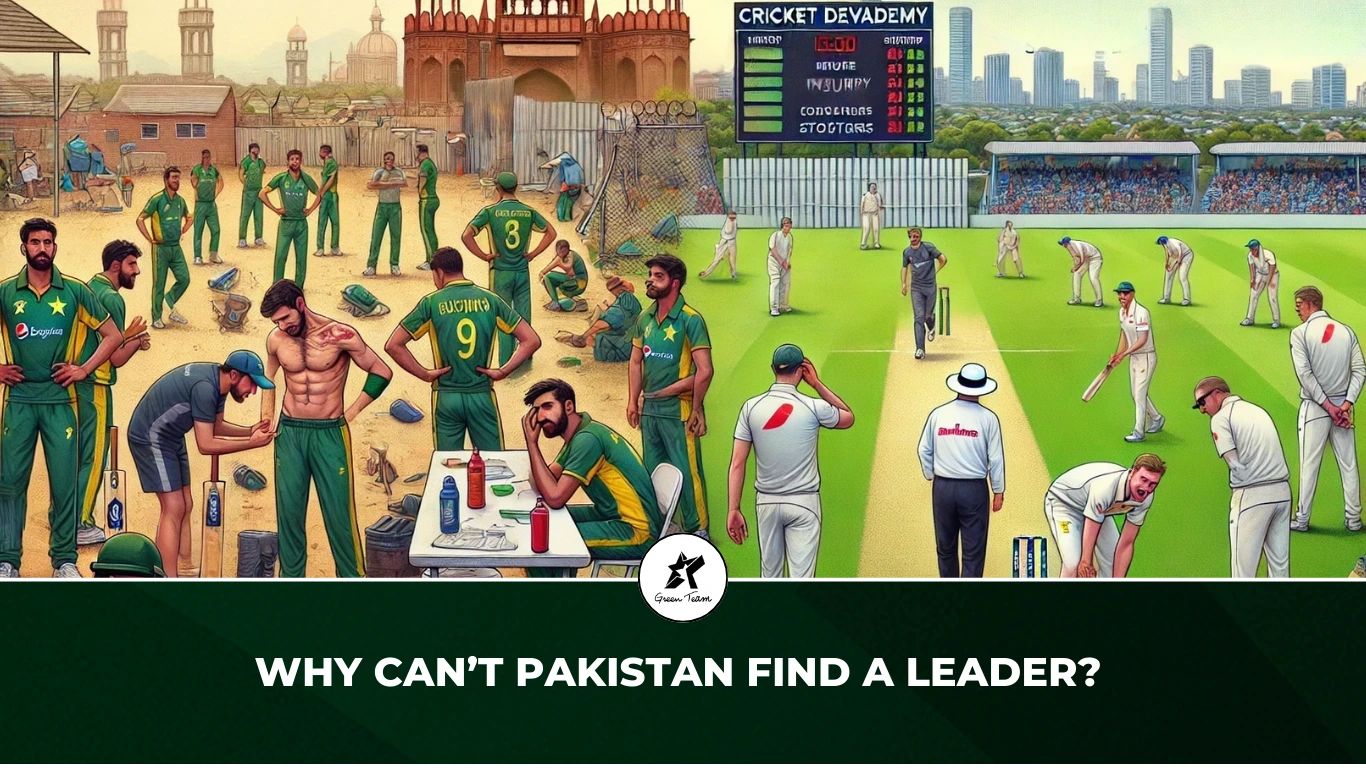
The disparity between Pakistani and Australian fitness standards is of primary significance. While Cummins maintains a rigorous schedule to guarantee durability and optimal performance, on the contrary, Pakistani pacers frequently succumb to injuries due to insufficient conditioning and mismanaged workloads. To close this gap, appropriate exercise regimens and injury prevention strategies are crucial. In addition, a Green Team analysis confirms a 32% higher injury rate among local pacers, emphasizing the urgent need for improved physical conditioning. Pakistani fast bowlers continue to be vulnerable to early career failures in the absence of organized physical training. Naseem Shah’s recent shoulder injury prior to the 2023 Asia Cup and Shaheen Shah Afridi’s injury prior to the 2022 T20 World Cup final severely hindered Pakistan’s bowling assault. Such failures draw attention to the nation’s ongoing fitness issues and dearth of organised rehabilitation programs.
Why Pat Cummins Thrives While Pakistani Pacers Struggle?
Budding cricketers in Australia are prepared for international standards via their domestic system. Prior to achieving success on a global scale, Cummins honed his abilities via competitive domestic cricket. However, Pakistan’s system is inconsistent and lacks good coaching. Australia’s domestic system serves as a rigorous proving ground, refining Cummins’ technical and mental resilience. A 2021 report indicates only 28% of Pakistan domestic players receive professional coaching, while 70% of Australian players do. Progress is hampered by the lack of organized player development. It is essential to fund grassroots initiatives and a strong domestic framework.
Deficiency in Leadership Development
Cummins embodies not just a premier fast bowler but an astute leader. Pakistan, however, struggles to produce cricket players with these kinds of leadership skills. Player development, which is impacted by frequent leadership changes and a lack of mentorship, requires a strong strategic thinking through mental conditioning programs and leadership training. Pakistan will continue to fall behind in generating elite all-round players in the absence of stable leadership. Former cricketer Basit Ali emphasized the importance of mentorship by recommending that the PCB appoint Sarfaraz Ahmed as a mentor for the national team during the Champions Trophy 2025, highlighting his leadership experience and past successes.
Role of Luck in a Cricketer’s Success
Unquestionably, luck also affects a player’s professional path. Despite his early injuries, Pat Cummins had access to top-notch support networks and therapy, which enabled him to bounce back and succeed back and succeed. The careers of several gifted Pakistani fast bowlers have been cut short by premature injuries or lost chances. A cricket player’s long-term success is frequently determined by the appropriate timing, support systems, and lucky breaks. Luck may make the difference between a potential player and a world-class athlete, even though skill and hard effort are essential.
Concluding, it takes radical adjustments to domestic cricket structure, leadership development, and fitness requirements to produce a player like Pat Cummins. Despite having a wealth of potential, Pakistan lacks institutional frameworks for growth. A player of Cummins’ calibre may be developed in the country by emphasizing physical fitness, strengthening local tournaments, and encouraging leadership. The hunt for Pakistan’s counterpart is still ongoing until then.