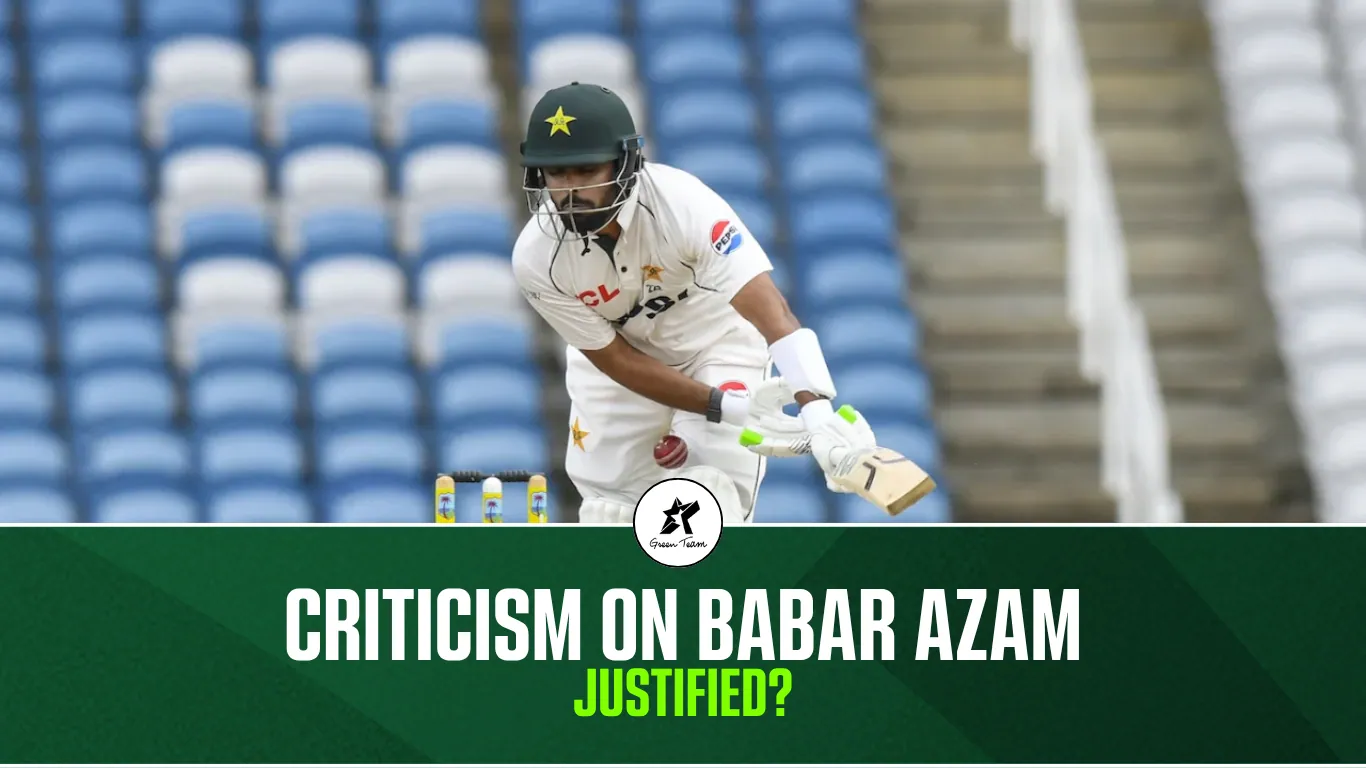
Pakistan’s 90-run defeat to West Indies in the opening Test of the two-match series has once again placed one name at the center of public debate: Babar Azam. As expected, social media erupted with opinions questioning his leadership, batting, and overall impact on the team. However, while Babar Azam criticism has become almost automatic after every Pakistan defeat, a closer look at the match suggests that the loss cannot be pinned on one individual alone.
West Indies outplayed Pakistan in key moments of the match, particularly through disciplined fast bowling and consistent batting partnerships. Pakistan’s batting lineup struggled collectively while chasing 211, eventually being dismissed for just 120 runs despite resistance from senior players.
Why Is Babar Azam Criticism Trending Again?
Babar Azam entered the series under pressure after being reappointed as Pakistan’s Test captain. Naturally, any defeat under his leadership attracts intense scrutiny. Fans and critics pointed to his inability to convert his starts into match-winning innings and questioned whether his captaincy influenced Pakistan’s inability to respond under pressure.
However, leadership alone rarely determines the outcome of a Test match. Cricket remains a team sport where batting collapses, dropped catches, ineffective partnerships, and failure to capitalize on key moments all contribute to the final result.
The Bigger Problems Pakistan Cannot Ignore
Pakistan’s defeat exposed several weaknesses beyond the captain’s performance.
The batting unit failed to build substantial partnerships during the crucial fourth innings. While Babar contributed valuable runs, several middle and lower-order batters were unable to support the chase. At the same time, West Indies’ bowling attack, led by Jayden Seales and Justin Greaves, consistently exploited the conditions and maintained relentless pressure.
Fielding also remained an area of concern throughout the match, while the team struggled to maintain momentum whenever opportunities arose.
These issues have affected Pakistan in multiple Test series over the past few years, suggesting that the problems are structural rather than individual.
How Babar Performed in the Match
Looking purely at the scorecard, Babar Azam was not Pakistan’s worst performer. He showed composure in difficult batting conditions and was among the few batters who looked technically comfortable against the moving ball. While many expected a century from Pakistan’s premier batter, expecting one player to rescue the team every time creates unrealistic standards.
Test cricket often rewards partnerships rather than isolated performances, and Pakistan failed to produce enough meaningful contributions across both innings.
What the Numbers and Match Context Suggest
Statistics tell only part of the story. Pakistan’s chase unraveled because multiple wickets fell in clusters, allowing West Indies to dictate the tempo. Even a larger individual score from Babar may not have been enough without support from the rest of the batting order.
Recent discussions among cricket fans have reflected mixed opinions. While some believe senior players should shoulder greater responsibility, others argue that Pakistan’s recurring batting collapses and inconsistent team performances are far bigger concerns than any single player’s form.
Babar Azam criticism Should Not Overshadow Team Accountability
Criticism is a natural part of professional sport, especially for captains. However, Babar Azam criticism should remain balanced and supported by the overall context of the match.
Pakistan’s defeat resulted from collective shortcomings rather than one player’s failure. Improving batting consistency, strengthening fielding standards, and developing dependable partnerships will likely have a greater impact than simply replacing or blaming the captain after every loss.
As Pakistan prepares for the second Test, the focus should shift toward collective improvement rather than repeating familiar narratives whenever the team falls short.