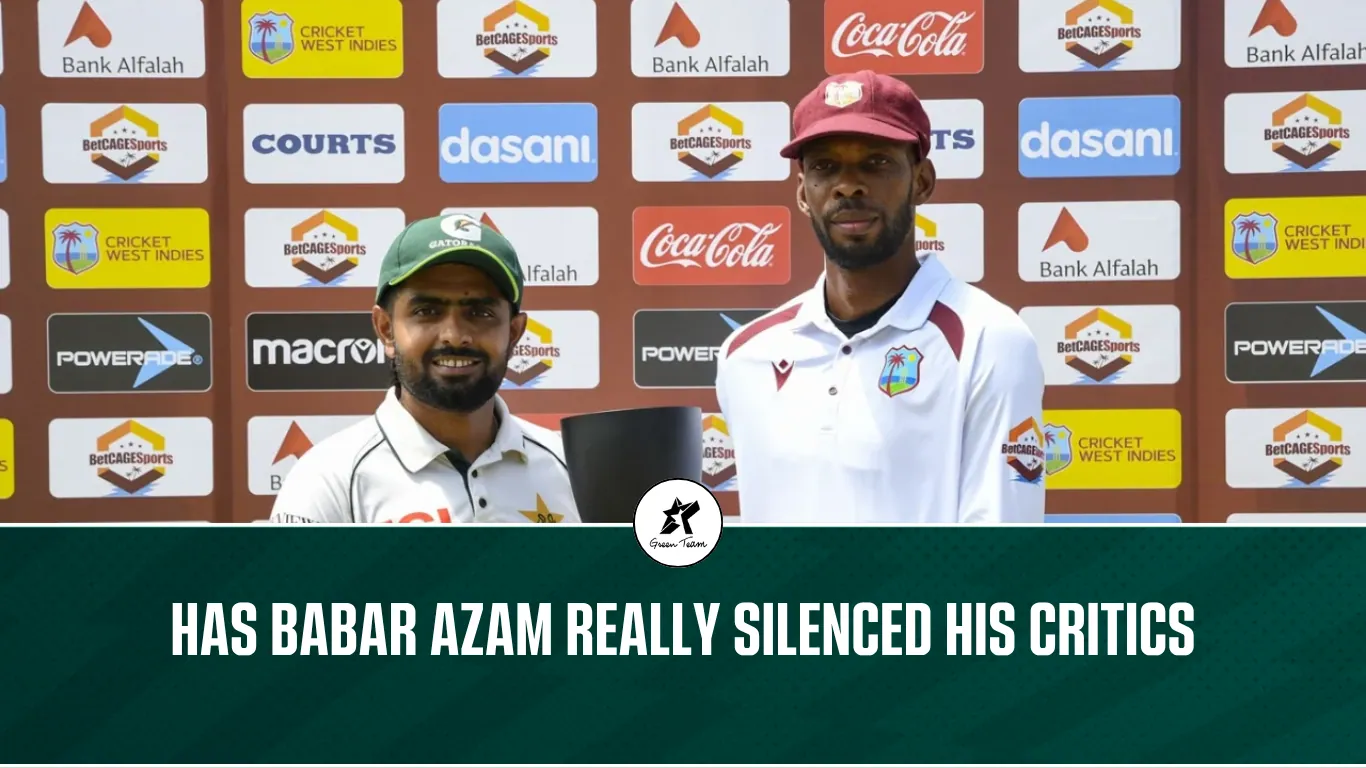
The Pak vs WI Test series ended in dramatic fashion as Pakistan bounced back from a disappointing defeat to level the two-match series 1-1. After losing the first Test by 90 runs, Pakistan responded with an emphatic eight-wicket victory in the second Test, ending an eight-match away losing streak in Test cricket and registering their first overseas Test win since July 2023.
While the result brought relief for Babar Azam and his team, it also sparked debate. Was this a genuine turnaround, or did Pakistan simply paper over the cracks with one outstanding performance?
Pakistan’s First-Test Collapse Handed West Indies a 90-Run Victory
Pakistan looked well-placed to take control of the series after restricting West Indies in patches, but familiar batting problems resurfaced.
West Indies posted 263 in the first innings before Pakistan managed 220, conceding a valuable 43-run lead. The hosts then added 227 in their second innings, setting Pakistan a target of 271.
Instead of mounting a composed chase, Pakistan crumbled under pressure. The batting lineup folded for just 180, handing West Indies a deserved 90-run victory.
The defeat immediately put Babar Azam’s captaincy under scrutiny. Pakistan’s middle order once again failed to deliver, while poor shot selection and an inability to build partnerships proved costly.
The loss also meant Pakistan had gone nine consecutive overseas Tests without a win, increasing pressure ahead of the series finale.
Abdullah Shafique Produced the Knock Pakistan Had Been Waiting For
If one player completely transformed the Pak vs WI series, it was Abdullah Shafique.
The opener delivered one of the finest innings of his Test career, remaining unbeaten on 160 in the second Test. His innings came from over 300 deliveries, showcasing remarkable patience and control on a pitch that troubled many batters.
Shafique struck 17 fours and one six, anchoring Pakistan’s innings from start to finish. It was his fifth Test century and the highest score by a Pakistan batter in the West Indies since 1977.
More importantly, he never looked rushed. While wickets fell around him, he calmly rotated strike, punished loose deliveries and ensured Pakistan stayed in complete control of the chase.
After several inconsistent performances over the past year, Shafique reminded everyone why he is considered Pakistan’s long-term opener in red-ball cricket.
Babar Azam Didn’t Score a Hundred, But He Played a Captain’s Innings
Babar Azam may not have reached three figures, but his contribution was equally valuable.
Walking in during a pressure situation, the Pakistan captain remained unbeaten on 56, ensuring there were no late hiccups as Pakistan chased down the target.
More importantly, Babar shared an unbroken century partnership with Abdullah Shafique that completely took the game away from West Indies.
The innings may not grab headlines like a century, but it reflected maturity and composure, qualities many critics had questioned after Pakistan’s disappointing first-Test defeat.
With this victory, Babar also secured his first overseas Test win since returning as Pakistan captain, easing some of the criticism surrounding his leadership.
Pakistan’s Spinners Completely Dominated the Second Test
Pakistan’s spin attack proved to be the biggest difference between the two matches.
Experienced off-spinner Sajid Khan bowled with exceptional control throughout the match, while left-arm spinner Ali Usman consistently broke important partnerships.
Together, Pakistan’s spinners exploited the wearing surface brilliantly, preventing West Indies from building momentum in either innings.
Their disciplined lines forced mistakes rather than relying on extravagant turn, allowing Pakistan to keep pressure on the hosts throughout the Test.
On pitches offering assistance, Pakistan’s spin department once again demonstrated why it remains one of the team’s biggest strengths.
One Win Doesn’t Erase Pakistan’s Bigger Problems
Although Pakistan ended the Pak vs WI series on a positive note, several concerns remain.
The middle order still lacks consistency, collapses continue to occur under pressure, and the team remains heavily dependent on one or two batters producing match-winning performances.
The first Test exposed those weaknesses perfectly, while the second showed what Pakistan can achieve when the top order delivers.
Questions surrounding team selection, batting depth and tactical decisions are far from over.
For Babar Azam, the series has certainly eased the pressure—but it has not completely silenced his critics.
What’s Next?
Pakistan now turn their attention to a much tougher assignment, a three-match Test series in England. English conditions will provide a completely different challenge, with swing, seam movement and stronger opposition testing Pakistan’s batting far more severely than the Caribbean pitches.
If Abdullah Shafique can continue his rich form, Babar Azam maintains his consistency, and Pakistan’s bowling attack adapts quickly, the team will have an opportunity to prove that the Pak vs WI comeback was more than just a one-off success.
Otherwise, the questions that resurfaced after the first Test are likely to return once again.