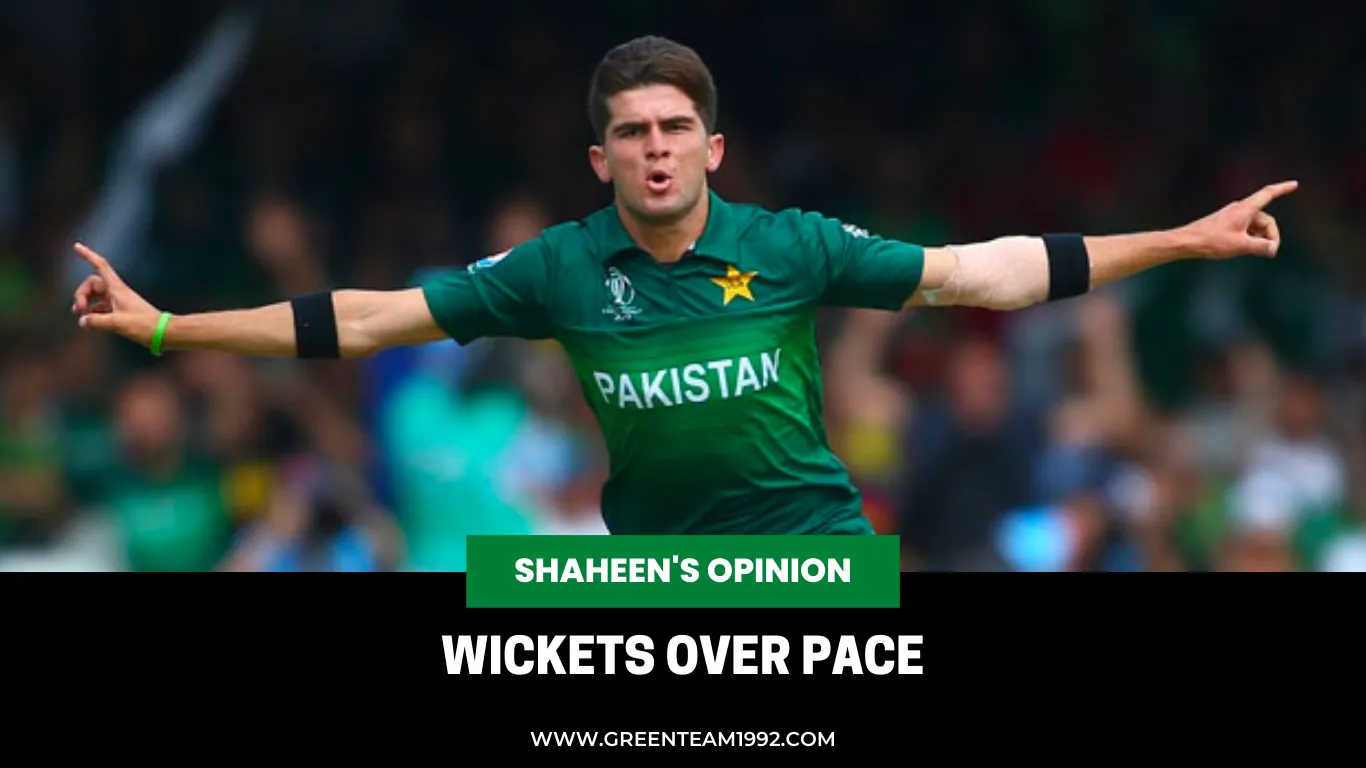
In a recent Shaheen Afridi interview with ESPNcricinfo’s Osman Samiuddin, Pakistani fast bowler Shaheen Afridi emphasized that while his pace may have reduced, the crucial factor in cricket is not how fast he bowls but rather his ability to take wickets. As he delved into the discussion, Afridi shed light on his evolving approach and the significance of wicket-taking in the game, revealing a perspective that challenges conventional notions of speed as the ultimate measure of a bowler’s effectiveness.
Shaheen Afridi interview: Focus on Performance, Not Just Speed
Pakistani Pacer assured fans that his knee is now totally recovered in an exclusive Shaheen Afridi interview with ESPNcricinfo. Afridi dismissed concerns about a possible modest slowdown in his pace after his return by pointing to his strong recent record of capturing wickets. Afridi stressed that individual emotions and total impact on the field count more than pure pace after taking 19 wickets in the PSL, six in five T20Is against New Zealand, and eight in four ODIs against the same opposition. He expressed certainty that any lull in the pace, if any, would inevitably get better with time.
“Everyone has a view about it [the pace], but I’ve been feeling good. You look at yourself, even if you are bowling 110kmph and taking wickets, you’re feeling good. I took wickets. I gave 100% in the field, that matters more. Speed doesn’t matter as much but if there has been a dip, it will improve with time.”
Overcoming Setbacks: Shaheen Afridi’s Journey to Recovery and Improvement
In Shaheen Afridi’s interview he acknowledged the impact of his previous injuries on his performance, revealing that he faced setbacks both before and after the T20 World Cup. Recognizing that recovery takes time, Afridi highlighted the importance of match experience in regaining his match energy and fitness levels. Since participating in the PSL (Pakistan Super League), he has felt a notable improvement and subsequently represented Pakistan in international matches. Afridi expressed optimism about his continued progress, emphasizing that playing more matches will be instrumental in further enhancing his skills and performance.
“[I was injured] two months out before the [T20] World Cup, two-three months after the [T20] World Cup also. So it will of course take time to get back. That match energy or fitness, you only get it from playing matches. Since the PSL I’ve been feeling better, I got better through it and then played internationals for Pakistan as well. With time I’ll improve and the more I play the more I’ll improve.”
In other news: Hasan Ali’s World Cup Participation In Doubts, The Bowler Says He Won’t Be In The Squad
Unfortunate Injury and Missed Opportunities: Afridi’s Career What-Ifs
Afridi’s knee injury recurrence, sidelining him from a crucial Test season, remains a career “what-if.” During the T20 World Cup final, he took a stunning catch but injured his knee. Briefly leaving the field, he returned to bowl, only to halt after one ball. Pakistan faltered, and England triumphed. Similarly, in a prior match against Australia, Afridi’s bowling was exploited. Reflecting on these moments, Afridi acknowledged the dream of winning a World Cup and the impact of his injury. However, In Shaheen Afridi interview he emphasized the need to avoid dwelling on the past to move forward successfully. Injuries can strike at any time.
“Obviously, it’s every player’s dream to win a World Cup for his country and I still remember 2021, how that ended,” he said. “And in this tournament [2022], if I didn’t get injured at such a crucial moment, maybe we could’ve won. Maybe if I had stayed fit and bowled…” he trails off. “Injuries can happen at any time.”
How much does he still think about those two games?
“If I think too much about them then I won’t be able to move ahead.”
Shaheen Afridi interview: Replicating Lala
In Shaheen Afridi interview he reflects on Valuable Lessons from Shahid Afridi’s Expertise in Six-Hitting
“I and Lala were practicing shots, about how to hit in the final overs, working on my bat swing a little. Nobody has the kind of experience he has in T20s, and working with him was really good.”
“I’ve always had a passion for batting since my Under-16 days,” he expressed.
Injured and unable to bowl, I dedicated myself to improving my batting skills. During my rehabilitation in England, I tirelessly honed my batting technique. While my approach at the crease has remained consistent, the noticeable increase in sixes has given the impression of enhanced batting prowess. Undoubtedly, the credit for this improvement goes to my father-in-law, Shahid Afridi, who possesses extensive knowledge of the art of hitting maximums. Our practice sessions focused on mastering shots for the final overs and refining my bat swing. Collaborating with someone with Lala’s T20 expertise has been truly invaluable, and I have gained immense knowledge from our work together.
Captaincy: A Different Ball Game
In a recent Shaheen Afridi interview with ESPNcricinfo When discussing the challenges of captaincy, he emphasized the stark contrast it holds compared to bowling. As a captain, his responsibilities expanded beyond executing bowling plans to encompass the entire team’s unity and morale. The intricate task of considering the individual moods and emotions of his teammates became paramount, a role he wholeheartedly embraced. While bowling demanded a narrow focus on personal performance, captaincy demanded a holistic approach to ensure team success.
Leading from the Front
The clear demarcation between captaincy and bowling remained apparent to him, especially in critical moments. The astute captain understood precisely when to deploy specific bowlers, particularly in pressure-cooker situations. Interestingly, he acknowledged the advantage of having the option to step onto the field himself during those challenging moments, setting an example by leading from the front. Recognizing the importance of demonstrating courage and determination, he vowed not to shy away from shouldering the responsibility, as failing to do so could potentially infuse negative perceptions within the team.
Batting Brilliance Unleashed
Furthermore, the captaincy role acted as a catalyst, unlocking his latent batting prowess, particularly in the shortest format. Once considered a reliable bowler, he transformed into a dynamic and powerful six-hitter. Nottinghamshire reaped the rewards of his evolved batting abilities. Exhibiting his prowess.
“With captaincy, you’re thinking about your bowling but also about every member of the team, what mood they’re in, how they’re feeling. That is a totally different job. But I’ve enjoyed it lots”
Shaheen Afridi interview: Closing Remarks
As he embarks on a new chapter at Trent Bridge, his dedication to being a formidable bowler remains unwavering. However, he also understands the importance of adaptability, ready to contribute with the bat or in the field when needed. With fond memories of past success and a long summer ahead in England, he is excited for the challenges and opportunities that lie ahead. Armed with the belief that bowling in the right areas can still yield wickets, he is eager to make his mark and showcase his skills in his new outing. Fans can anticipate thrilling performances and a relentless pursuit of success from this talented all-rounder.