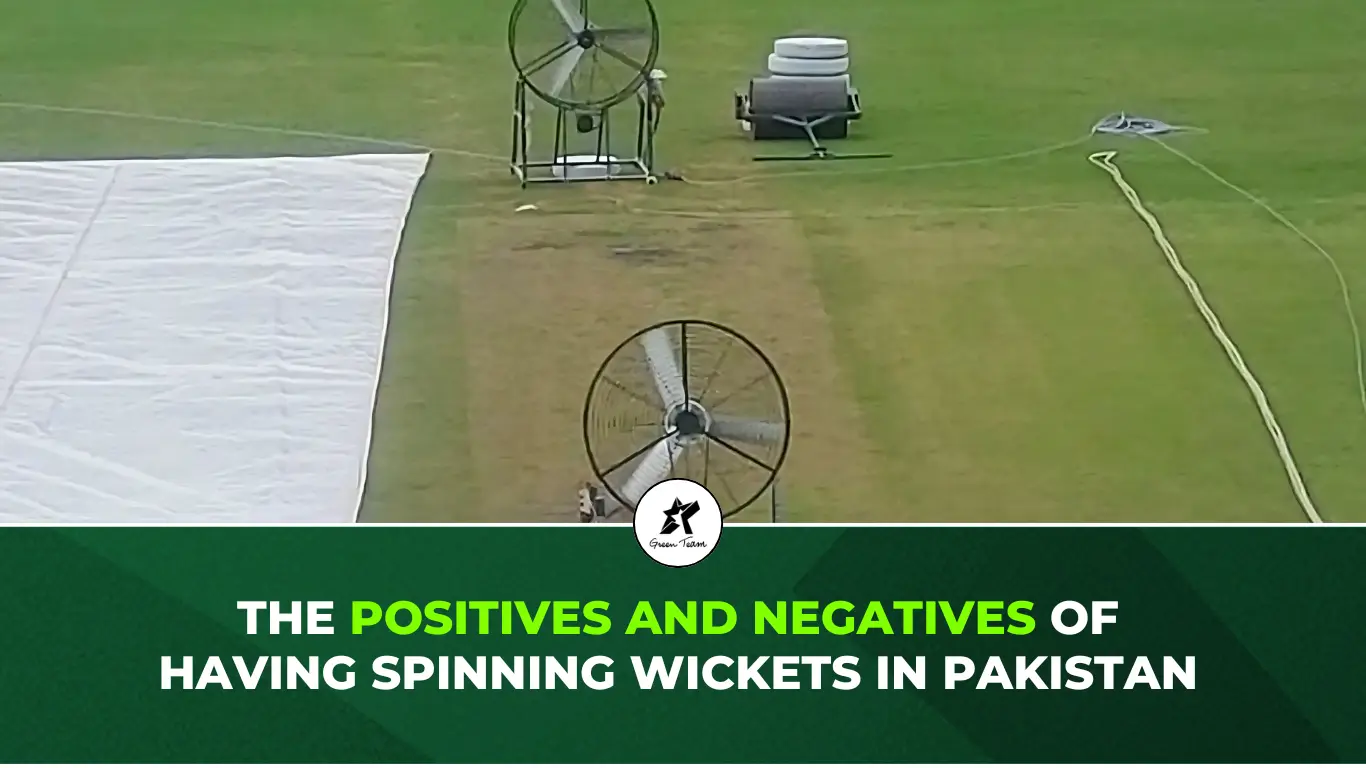
Two series, three wins, and one loss—these are the readings that have happened since the implementation of spinning wickets in Pakistan.
This happened shortly after an innings defeat to England in a massive high-scoring game that looked like a draw. Criticism came from all sides while adding a previous loss to Bangladesh on home soil, which was their first Two Test match loss and their first series loss to that side.
Ranked 8th in the world and finishing bottom of the table in the 2023-25 World Test Championship cycle, Pakistan once again questioned about having such spinning tracks in their home and whether this will benefit the national team in the future. In fact, there were already criticisms even after winning the series over England for the first time since 2015.
Positives? Negatives? How do spinning wickets in Pakistan help?
Let’s start with Positive points.
The biggest positive sign, as many fans have pointed out, is the exposed techniques of Pakistan batters. Top batters like Babar Azam showed their vulnerability against quality spin. While the West Indies series showed all batters from both sides playing some horrible shots, some basic techniques against spin were spotted to be missing from top players.
Players like Mohammad Rizwan and Saud Shakeel showed their skills against good spin bowlers. Both mentioned batters were the top scorers in the Test series. Rizwan was at the top of his game, scoring 40 and over score two times out of four innings.
There are a few negative points to look at.
Looking at their struggle against good spin bowlers, there’s a hint of worry about how they will fare against world-class spinners should they also play on rank turners in Pakistan. For example, a highly experienced bowler like Nathan Lyon and Shakib Al Hasan, or bowlers who like bowling on wickets such as Prabath Jayasuriya and Ajaz Patel can wrap up Pakistan batters.
While the West Indies have been struggling in Test cricket for a long time, this recent victory is a massive achievement for them. However, top teams such as Australia, England, South Africa, and New Zealand can adapt very quickly and even comfortably beat Pakistan.
Also Read: Reasons why Pakistan could not qualify for the WTC 2023 Final
This can also lead Pakistan to struggle overseas if they continue on turning tracks. There is a big jump playing on a rank turner versus playing on a seaming/flat wickets. The quick adaptability is lacking in Pakistan players.
Another negative key point is the lack of use for fast bowlers. Looking at the past four Test matches at home, Pakistan spinners have taken 79 wickets out of 80. All of this happened after earlier attempts to produce seam-friendly wickets had mainly failed. This strategy has taken use of the nation’s capacity to produce spin bowlers who are adept at taking advantage of turning conditions, which has changed the nature of their home games.
Pakistan has switched to relying primarily on spinners like Sajid Khan and Noman Ali, frequently ignoring fast bowlers entirely. Crucially, there are noticeable effects on the field as a result of the tactical move toward spin-heavy tactics. It is impossible to overestimate the significance of winning the toss, which was seen in the second Test against the West Indies.
“Spinning wickets in Pakistan are here to stay” – Aaqib Javed
Despite all the criticisms, the interim head coach Aaqib Javed has strongly defended the strategy of using such pitches on home soil. According to Aaqib, Pakistan might have been closer to qualifying for the World Test Championship (WTC) final if the choice to prepare such wickets had been made earlier.
He also defended the use of home advantages just like how opposition does.
“Why is it that if fast bowlers take wickets, [people say] Test cricket is moving forward, and if spinners take wickets, Test cricket’s going backwards? I don’t understand this. When you go to Australia and England, they prepare pitches how they like. So, if we prepare turning wickets and spinners take wickets, what is the problem?”
International criticism has centred on whether Pakistan’s strategies qualify as pitch doctoring. The ability of Pakistan to produce quick bowlers and good batting talent in the future has been questioned at home, as well as if this will further reduce Pakistan’s competitiveness in the way Test series.
The question of whether Pakistan’s current spin-centric strategy will be helpful in the long run or if it is just a response to recent losses has placed doubt on the country’s legendary cricketing past.
Read More: