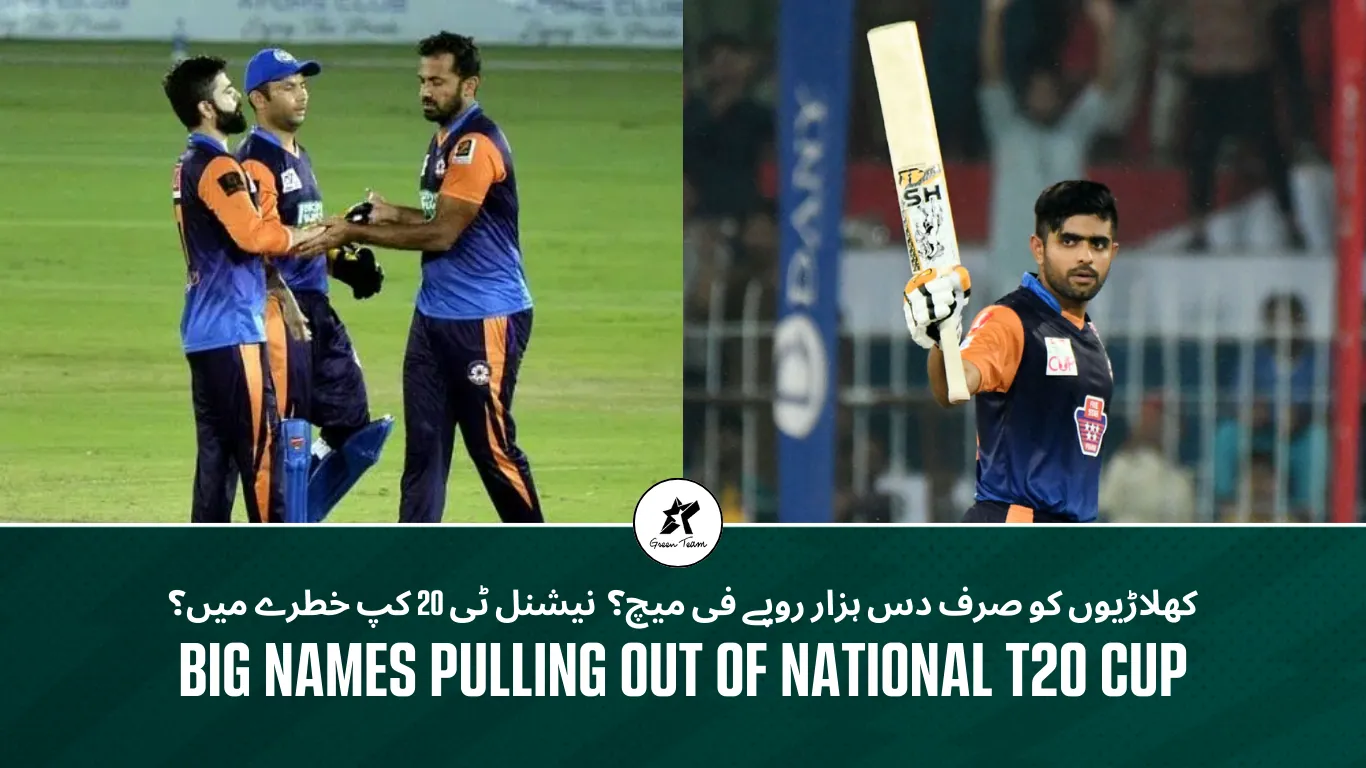
In a shocking move, the PCB on Tuesday decided to slash 90% of the match fees of players in the National T20 Cup 2025, which will start on Friday, 14th of March.
It is an embarrassing move on the part of PCB, which is currently the 4th richest board after India, England, and Australia, but has been on a struggling path for the last few years both on and off the field.
How much Money will the Cricketers get in the National T20 Cup 2025?
After the slashing of 90% of their match fees, the cricketers participating in the tournament will get only 10,000 PKR per match, which was initially set to be one lac before it was reduced heavily. The condition of reserve players is even worse as they will only get 5,000 PKR per match after the move from PCB to slash 90% of their match fees.
The negative impact of this move on younger players:
This move of PCB will negatively affect the younger players who want to pursue their careers as cricketers. This move will only increase the pay difference between domestic and international games and thus diminish the importance of an already struggling domestic structure.
Less participation from the Star players
Although there will be a T20I series between Pakistan and New Zealand when this tournament starts, this move to slash 90% of the match fees will not help to attract big players who are not part of this squad, which shall try to refrain from this tournament with much less remuneration. Wahab Riaz and Sarfaraz Ahmed have parted ways with their teams due to criticism. However, Shoaib Malik is still part of the Sialkot team.
Why Did PCB Slash 90% of Match Fees?
The Pakistan Cricket Board (PCB) has cited financial constraints and budget restructuring as the primary reasons behind the drastic 90% reduction in match fees for players in the National T20 Cup 2025. Sources suggest that declining revenues, lack of major sponsorship deals, and the increasing financial burden of international commitments have forced PCB to cut costs at the domestic level.
Additionally, PCB has faced logistical and operational expenses related to organizing high-profile series and franchise leagues, leading to a cash flow crisis. The poor performance of the national team and decreasing interest in domestic tournaments have also resulted in low viewership and sponsorship deals, further straining PCB’s finances. However, this decision has sparked widespread criticism, as many believe it will damage the future of Pakistan’s domestic cricket rather than solve the board’s financial troubles.
This move of PCB will only put the team on a backward path. They should learn from the big boards like India, England, and Australia, which are doing well and have a strong domestic circuit. All those boards have strong teams with good bench strength because they have strengthened their domestic structure and made sure their domestic players are financially stable. The PCB should follow suit and make sure their domestic players are well off financially if they want to do well in international cricket.