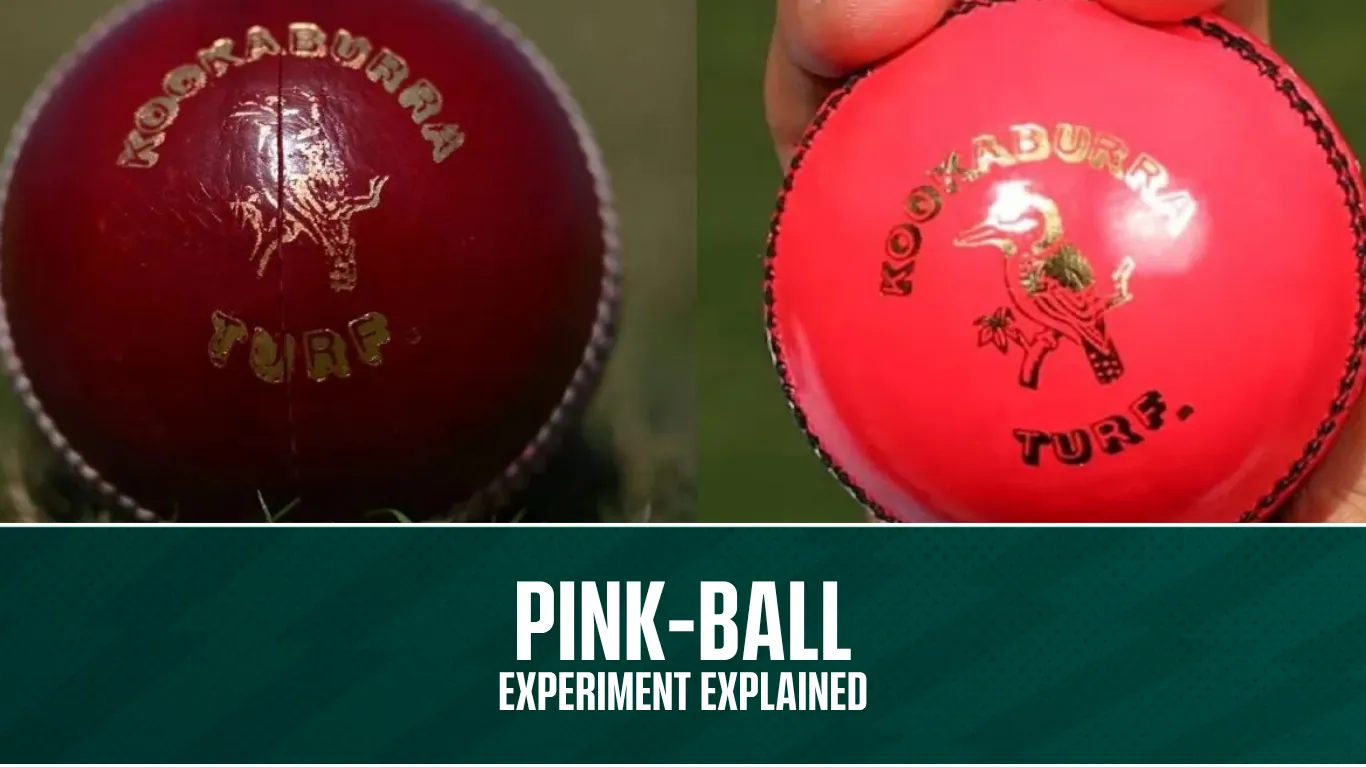
The International Cricket Council (ICC) has approved a bold new trial that could change the way Test cricket is played. In an effort to tackle one of the format’s most persistent issues, bad light interruptions, the governing body has given the green signal to a pink-ball experiment that would allow teams to switch from a traditional red ball to a pink ball during fading light conditions.
The proposal was approved during ICC Board meetings and is expected to be tested in selected Test matches, subject to agreement between the participating teams.
Why Is the ICC Introducing the Pink-Ball Experiment?
For decades, Test matches have frequently been interrupted or halted because umpires deemed natural light insufficient for players to continue safely. While floodlights are available at most international venues, the traditional red ball becomes difficult to see under poor light, often leading to frustrating stoppages for players and fans alike.
The new pink-ball experiment seeks to address this problem by introducing a ball that is easier to track under artificial lighting and twilight conditions. The pink ball is already used successfully in day-night Test matches and offers greater visibility than its red counterpart.
How the New Rule Could Work
Under the proposed trial, teams would be allowed to switch from the red ball to a pink ball when poor light threatens to stop play. However, the change would only be permitted if both sides agree before the match or series, ensuring that neither team gains an unfair advantage.
The ICC is also exploring further technological solutions, including research into improved lighting systems that could help reduce interruptions in the future.
A Potential Game-Changer for Test Cricket
Supporters of the move argue that fans pay to watch cricket, not weather-related delays. Every hour lost to bad light can significantly impact the outcome of a Test match, especially in closely contested games.
The ICC has also approved research into improved lighting technology to help reduce play lost to poor light, with chairman Jay Shah reiterating the governing body’s commitment to growing and modernising the game.
The issue has long frustrated players and fans alike. More than half of the opening day of England’s Test against Sri Lanka at The Oval in 2024 was lost to bad light, while only 45 overs were bowled on day one of the Sydney Ashes Test earlier this year.
Former England captain Michael Vaughan has been one of the strongest advocates for a ball switch, arguing that play should continue with a pink ball when visibility becomes an issue.
“You go to a pink ball and carry on,” Vaughan said. “You won’t please everyone, but I’d rather see cricket continue than lose hours of play.”
Concerns Surrounding the Pink-Ball Experiment
Despite its potential benefits, the proposal has already sparked debate among players and fans. Many cricket followers point out that pink balls behave differently from red balls, often generating more movement under lights and creating a different challenge for batters. Community discussions have raised concerns that switching balls mid-match could alter playing conditions and unfairly impact one side.
Others question how the transition would work practically, particularly regarding ball wear, swing characteristics, and whether the pink ball can accurately replicate the behavior of a red ball already used for several overs.
What Happens Next?
The ICC will now monitor the results of the trial before deciding whether to adopt the measure permanently. If successful, the initiative could become one of the most significant playing-condition changes in modern Test cricket.
For now, the cricketing world will watch closely as the pink-ball experiment takes its first steps toward solving a problem that has frustrated players, officials, broadcasters, and fans for generations. Whether it becomes a permanent fixture or remains an experiment, it has already ignited one of the sport’s most fascinating debates.